Please join us to discuss everything literary (especially kid literary): good books, the writing life, the people and businesses who create books, controversies in book world, what's good to snack on while reading and writing, and anything else bookish. We welcome your thoughts.
This past Friday, June 5,
2015, Marcy and I posted our answers to Paul’s debut novel Surviving Bear Island. Today, you get to read Paul’s favorite's.
Great answers, Paul! We
can’t wait for our readers to read the novel. And hopefully to give us a few of
their favorites, too.
1) What is your favorite line or paragraph
from the novel as it relates to the main character's development and/or growth?
Part of me wanted to go back and just stay. It would
be easier that what I was doing now. But I knew that choosing the easy path
meant choosing death. And I wanted to live. P. 90.
2) What is your favorite chapter ending or
cliffhanger?
Chapter
One: I scanned the water. No sign of the sea lions. And the waves seemed to be
calming down. Little did I know I would be upside down in the water in less
than an hour—fighting for my life.
3} Who is your favorite secondary
character and why?
Surviving
Bear Island has one primary character. I’d say my favorite secondary character
is Tom’s father because even though he isn’t present for most of the story,
Tom’s relationship to him continues to develop.
4) What is your favorite line or paragraph
of description?
Sometime toward morning the heavy rain and wind
died, replaced by a fine mist, like the ground had taken as much moisture as it
could and was spewing it back as fog.
P. 163
5) What is your favorite line of dialogue?
Tom’s father: “When you’re alone in the wilderness,
everything is magnified.” P. 43
BIO
Living in Alaska for 25 years, Paul has seen bears
fishing for salmon, a pair of bald eagles building a nest, polar bears gnawing
on a whale carcass, 10,000 walruses hauled out together on the Bering Sea coast,
and 120,000 caribou gathered on the Arctic Coastal Plain. And when he’s not
teaching school or exploring the Alaskan wilderness, Paul Greci is thinking up
ways to keep hungry moose out of his garden. His debut novel, Surviving Bear Island is a 2015 Junior
Library Guild Selection.
Brief HISTORY OF HOW SURVIVING BEAR ISLAND CAME TO BE
PUBLISHED
Having completed the first draft of this novel 10
years ago, and then countless drafts since then, I feel incredibly fortunate to
have found a home for this book. Six years into the revision process Surviving Bear Island morphed from a
third-person young adult novel into a first-person middle grade novel. The main
roadblock I ran into when writing Surviving
Bear Island was how to write a story with primarily one character and have
it have authentic emotional depth and complexity. Early drafts of my story were
very plot heavy and episodic. As the years went by and I wrote other stories
where characters were interacting with each other, I developed my skills for
exploring emotional depth, and also for writing in first person. I think those
other manuscripts I wrote gave me the tools I needed to transform a
single-character third-person narrative into a single-character first-person
narrative that was much more character-driven and emotionally authentic. As my
agent was trying to sell a different manuscript, we started working on getting Surviving Bear Island ready for
submission and then started subbing it simultaneously with the other
manuscript, and it found its home at Move Books.
Congratulations to Paul on his debut novel, Surviving
Bear Island and for the novel being chosen as a Junior Library Guild selection.
Way to go, Paul!
To
read more about Paul Greci’s debut novel, Surviving Bear Island, please
go to:
Welcome to June’s version of - First Friday - Five Favorite Things - Debut Novel Day. In this
monthly series, we ask five simple questions about a debut novel that will
hopefully entice anyone reading this post to pick up the novel and read it
themselves, and/or give them at a glance some insight into the author's writing
style and voice as well as how some of the characters might think or act. We do
this by presenting, first, answers to our
Five Favorite Things, followed by the author's answers in a follow-up post.
This month we're pleased to highlight debut novelist,
Paul Greci and his novel, Surviving Bear
Island. Tom is stranded on Bear Island in the Alaskan wilderness during a
kayaking trip with his father. When his kayak is overturned, Tom finds himself
alone, but quickly finds out that living a solitary life on a remote and
deserted island is the least of his fears.
Marcy and I can’t wait for you to join this incredible
journey on the island with us.
1)What is your favorite line or paragraph from the novel as it relates to
the main character's development and/or growth?
Dave – Tom has been struggling
for days to survive on the island. His time alone has given him plenty of time
to think of the problems plaguing him, one of which was trying to come to grips
with the fact he believes he was responsible for his mother’s death. I like how
he learns to accept what he has or has not done. I believe this passage
portrays those feelings well.
I knew I had to take care of myself. That no one was going to do
anything for me. And when it comes right down to it, you have to rely on
yourself. You’ve got to live with yourself and the choices you make.
Marcy – Throughout
the novel, Tom has a lot of time to reflect on his home life and his problems.
This paragraph is poignant and reflects that early on in the novel, the main
character has the instinct to survive in bad times both at home and on Bear
Island.
After
he found out Mom died, he stood in the kitchen and dropped plates, one by one,
on the floor until he’d broken them all. Then he took the bowls and did the
same thing. I remember telling him to stop, but he acted like I wasn’t even
there. I went into my room and cried and cried, and he never came in. When I
came out hours later, he was sitting on the couch, and in the kitchen there
wasn’t a speck of glass on the floor. I sat down next to him, and he put his
arm around me. “We’ll get through this,” he said. But then he didn’t say
anything much for months and months.
“I’ll
get through this,” I said. “I’ll keep searching for Dad until I find him.”
Another shiver ripped through my body.
2) What is your favorite chapter ending or cliffhanger?
Dave - As Marcy mentions below, there
were many fantastic cliffhangers, but I chose this one from earlier in the
novel while Tom is trying to escape from a bear.
The bear twisted away from me and I jumped backwards. My feet
scrambled for grip as my arms reached out for the steep slope. I grabbed a
berry bush by the base and it gave way. I fell backwards, like I’d been dumped
out of an airplane, and landed on my back with my legs flat, pointing down
slope. A sea of green flew over me as I bumped down the slope and gained speed
with no sign of stopping.
I let out a scream.
Then my heels hit something that sent a jolt through my hips and
all the way to the base of my head. I flopped forward, and all of a sudden I
was flying through the air. Everything slowed down, like an instant replay of
someone doing a ski jump.
I knew I was moving, was airborne, but felt no pressure-no
resistance. Then I slammed into the ground. Face first. Mouth first.
Marcy – There were many intense
cliffhangers in the novel. This chapter ending was more about survival and
perseverance.
Choices. Life was full of choices. Don’t look back, I told myself.
It does no good. I swallowed the last of my jerky and started down the slope in
search of a place to camp.
3) Who is your favorite secondary character and why?
Dave – It’s difficult for me to
pick a secondary character, as Tom is alone for most of the novel. However,
through flashbacks, I got to meet his dad. Tom has vivid recollections of the
advice his dad has given, and to Tom’s great fortune, it always comes at a time
when he needs it the most, as if his dad is right beside him. Following, is an
example.
When you’re wet, the only way to stay warm without a fire or a
change of clothes is to keep moving.
or…
The spark’s got to hit some very small, dry flammable
material-like dried grass or wood shavings or tiny scraps of birchbark. And
then, you’ve got to blow on it and feed it.
Marcy – My favorite character is
Mom. Even though Tom’s mom is no longer with him, her spirit is still alive
inside of him and the memory of her guides him through his survival on Bear
Island. Her easygoing personality and love of life and music shines through in
her son.
I know my mom could’ve come up with something better, but she’d be
happy that I was making a song. A song with her in mind. “Let the music flow
through you,” she’d say. “Play with it. You don’t make mistakes when you make
music. You make discoveries.”
There had to be a salmon stream farther back in the bay. Had to be, or else I’d have to cut off some fingers and roast them. Maybe
I could work that in.
So the whole thing would go like this:
Wormy blue berries will help.
But alone will only make me yelp.
Like a dog I need more than a treat.
Salmon for the Sentinels can’t be beat.
If I don’t find any, then fingers I’ll eat.
4) What is your favorite line or paragraph of description?
Dave– This section comes from
later in the novel while Tom is trying to use his flint to spark a flame,
something he has never done, but needs to do, because he has no other resources to start a fire. I can see what he is doing. I can feel it, feel exactly what he
is going through. Can’t you?
Come on, I thought. Just this one time. All I need is one flame. I
closed my eyes and just kept running the knife up and down the flint. In my
mind I saw sparks, or maybe I was seeing images of the real things through my
eyelids. Part of me didn’t believe the flint would work, and part of me felt
like I was a failure because I had this fire-starting tool and couldn’t get it
to work. And all the time I just kept running the knife on the flint, keeping
my eyes closed. I could feel the wood shavings brushing my knuckles as my hand
moved.
“Fire, fire, fire,” I started singing.
Marcy
– This paragraph shows a great deal about how Tom not only blames himself for
his mom’s death, but also how he believes his dad blames him as well.
And
for that whole first year I thought if Mom was gone I may as well be gone, too.
Like I was part of a package deal and now the deal was off. And I thought Dad
blamed me for Mom’s death too. I mean, he never told me he did, but he never
told me he didn’t. Never. And he was right there when she asked me if I wanted
to go on the ride and I chose to practice with my bow instead. The last thing
she’d said was: If you’re not going, I’m gonna bike the whole loop.” And later
that month my dad burned my bow and target.
5) What is your favorite line of dialogue?
Dave - For me, this line was easy.
It’s short, as are most of the things his dad has said, but it tells you
everything you need to know about what it will be like for Tom while alone on
the island.
“When you are alone in the wilderness,
everything is magnified.”
Marcy
– Tom often talks to himself since he doesn’t have anyone else. These few lines
are so very visual and true.
“Just
me now,” I said. “Me and the wild. I’m wild. Part of the wild.”
To
read more about Paul Greci’s debut novel, Surviving Bear Island, please
go to:
If you're the parent of a teen, tween and even younger, they have probably
used an electronic device of some kind. Heck, in my son's middle school,
all of the students are issued Chromebooks in the beginning of the school year.
All of their books and most homework is done online. They collaborate with
teachers and other students via email and Google Docs.
My boys are computer savvy, but as a parent I worry. You can't watch them
24/7 and monitor every single document, video and text. I pay attention.
I've had the talk about online predators at least a zillion times. I've even
had my best friend who worked for the Federal Bureau of Investigations in
the division of online Crimes Against Children have several talks with
my older son on her experiences and advice on how to be careful online.
New apps are popping up every day. My advice is to be aware, ask questions
and do surprise checks on all devices. If your children know you'll be checking up
on them, they'll be less likely to post and comment inappropriately online. I always
tell them never to post anything they wouldn't want the world to see.
Here's a link to a great article on protecting your teen!
I have copied an article reprinted in this past Sunday's New York Times about children's author Jeff Kinney opening a bookstore in his hometown of Plainville, Massachusetts, set to open on May 30.
Andrea Perry
The Bookstore Built by Jeff Kinney, the ‘Wimpy Kid’
MediaBy Sofia Perpetua1:42
Diary of a Bookstore and a ‘Wimpy Kid’
If anyone knows how to sell books, it’s Jeff Kinney.
Over
the last eight years, Mr. Kinney has built one of the most popular and
lucrative franchises in publishing. His middle-grade series, “Diary of a
Wimpy Kid,” the fictional illustrated diary of a middle-school misfit,
has more than 150 million copies in print, in 45 languages. The series
has spawned three feature films that have earned more than $225 million
worldwide at the box office.
His
fans still want more. Mr. Kinney is finishing the screenplay for a
fourth film, working on two animated TV specials for Fox and furiously
writing jokes for the 10th book.
But lately, Mr. Kinney’s attention has wandered elsewhere.
“If
my whole life were ‘Wimpy Kid,’ it wouldn’t be very fulfilling,” he
said during a recent interview. “I don’t want to be designing ‘Wimpy
Kid’ pillow cases for the rest of my life.”
Now,
in a risky and ambitious next act, Mr. Kinney will start selling other
people’s books. He’s opening a bookstore, called An Unlikely Story, in
his adopted hometown, Plainville, Mass., about 40 miles south of Boston.
And while he doesn’t want the store to resemble a “Wimpy Kid” theme
park, he’s willing to use the popularity of the series to draw in
customers. Mr. Kinney will work at the cash register and in the cafe on
occasion, and he plans to teach a cartooning workshop at the store.
Photo
Jeff Kinney's soon-to-open bookstore, An Unlikely Story, in Plainville, Mass., his adopted hometown.Credit
Charlie Mahoney for The New York Times
He’ll
keep a studio on the third floor, where visitors can catch a glimpse of
him at work, drawing on the 23-inch tablet that he uses to create his
cartoons.
“We’re
hoping my notoriety as a children’s author will be a draw for people,”
he said. At the same time, Mr. Kinney says he’s wary of leaning too
heavily on his brand and wants the store to outlast him. “This is not
going to work if it’s just a shrine to my books,” he said.
Mr.
Kinney, who made more than $20 million last year, might have become a
patron rather than a practitioner of the trade, like the novelist James
Patterson, who donated more than a million dollars to 178 bookstores
around the country last year. But he wanted to leave a physical mark on
Plainville, a former manufacturing town that is home to about 8,200
people.
“I
wanted to add a bookstore to the landscape,” he said. With this foray
into retailing, Mr. Kinney is joining a handful of authors who are
injecting cash and a dose of literary celebrity into what seemed a dying
trade. The novelist Ann Patchett came to the rescue of the Nashville
literary community when she opened an independent bookstore there in
2011. Other authors who moonlight as booksellers include Larry McMurtry,
Louise Erdrich, Garrison Keillor and the poet Lawrence Ferlinghetti.
Many
small bookstores nationwide, surprisingly, are holding steady and even
thriving. After years of decline, booksellers have rebounded lately as
print sales have stabilized, and their ranks are swelling. Last year,
the American Booksellers Association counted nearly 2,100 member stores,
compared with about 1,650 in 2009.
Ms.
Patchett, the co-owner of Parnassus Books in Nashville, said she had
expected her store to be a financial drain. Instead, Parnassus has
flourished, so much so that the store is expanding with a mobile book
van. Ms. Patchett has used her clout as an author to persuade prominent
writers like Elizabeth Gilbert, Donna Tartt, David Sedaris and Michael
Chabon to give readings at the store.
When
Mr. Kinney visited Nashville last year for a “Wimpy Kid” event held by
Parnassus Books, he grilled Ms. Patchett about her business.
“He
looked at me and said, ‘Just between us, how much money did you lose
the first year?’ ” Ms. Patchett recalled. “And I said, ‘Jeff, I made
money.’ ”
Photo
Jeff Kinney has built one of
the most popular and lucrative franchises in publishing. His “Diary of a
Wimpy Kid,” the fictional illustrated diary of a middle-school misfit,
has more than 150 million copies in print.Credit
Charlie Mahoney for The New York Times
Mr.
Kinney says he doesn’t expect to recover the millions of dollars he
sank into the construction of the store, but he wants to create a
sustainable business, one that could have a ripple effect and help
revitalize the town. “Hopefully, we’ll break even,” he said, adding
optimistically, “or even make a profit.”
Plainville, Pop. 8,200
Mr.
Kinney, who was born on an Air Force base in Maryland and grew up in a
suburb of Washington, has lived in Plainville for the last 12 years,
with his wife, Julie, and their two sons, ages 9 and 12. He’s easy to
spot riding around town on his red scooter. A tall, energetic,
boyish-looking 44-year-old, Mr. Kinney coaches soccer and still works at
his day job as the creative director of Poptropica, a story-based
gaming website he created in 2007.
The
Kinneys settled in Plainville because it was the one place that met all
their criteria. They were looking for a town near her parents in
Worcester and close to Boston, the headquarters of Funbrain, a company
where Mr. Kinney worked. They drew a Venn diagram on a map of New
England, and Plainville was in the middle. They took to the town
immediately. They considered moving to a bigger city when the first
“Wimpy Kid” book became a breakout best seller in 2007 but decided
against it.
“We like the size of it,” he said. Instead of leaving, they moved into a bigger house.
With the bookstore, Mr. Kinney is extending his roots in Plainville.
“Obviously,
the man could live anywhere in the world, and he chose to live in
Plainville,” said Joseph Fernandes, the town administrator. “The real
fortune for Plainville is that Jeff doesn’t have to rely on how much
money he makes running a bookstore to feed his family. Without Jeff
Kinney, I don’t know how well a bookstore would do at that location.”
The
store’s playful name is meant to evoke tall tales, but it is fitting in
other ways. The arrival of a bookstore is an unlikely turn for
Plainville, a town incorporated in 1905 that was once home to
manufacturers of jewelry, eyeglasses and plastic parts. The new store is
an anomaly next to venerable institutions like Gerry’s Barber Shop and
Don’s Diner (“Family Owned Since 1936”).
Photo
A scene from the 2010 film
version of "Diary of a Wimpy Kid." The title character, played by
Zachary Gordon, is third from right.Credit
Rob McEwan/20th Century Fox
In
2012, Mr. Kinney surprised residents when he bought a crumbling
building in the town’s historic center for $300,000. Over the decades,
the building, which dated to the 1850s, was a barbershop, a drugstore, a
tearoom and a general store. Then, for 17 years, it sat vacant, a
depressing blight on the town. Like everyone else in Plainville, Mr.
Kinney grew tired of looking at it.
Mr.
Kinney was not sure what to do with his new purchase at first. At one
point, he sought advice from his core audience, a group of local fifth
graders, whose suggestions included a roller coaster, a swimming pool
filled with M&Ms and a bookstore.
The
bookstore idea stuck, especially since a nearby Borders had closed.
“What’s the thing that everybody loves and treasures the most?” Mr.
Kinney said. “It’s a bookstore.”
The
project had a rocky start. An inspection revealed that the building
could not be salvaged, and it had to be demolished rather than restored.
“That was a tough day for a lot of people,” Mr. Kinney said. “You felt
history being erased.”
In
its place, Mr. Kinney commissioned a three-story building with
architectural echoes of the old general store. The building is made from
reclaimed wood and other recycled materials, and the interior features
hand-painted replicas of old signs that hung on the building over the
decades. Mr. Kinney designed the store’s logo and sign himself: a
bug-eyed cartoon elephant holding a book with its trunk, under the words
“An Unlikely Story.”
The
story of Mr. Kinney’s rapid rise to fame is itself pretty unlikely. He
studied computer science and criminal justice at the University of
Maryland, and he intended to become an agent with what is now called the
Bureau of Alcohol, Tobacco, Firearms and Explosives. Instead, he ended
up as a programmer at a medical software company and then a game
designer at Funbrain, an educational gaming website.
On
the side, he created comic strips, which he had loved since his
childhood. But his work was rejected by newspaper syndicates. In 1998,
he came up with the idea for “Diary of a Wimpy Kid,” the illustrated
diary of an acerbic and devious middle-school boy named Greg Heffley.
The stories were semi-autobiographical, loosely based on Mr. Kinney’s
childhood and “put through the fiction blender.”
He
had been working on the series for six years when his boss at Funbrain
suggested he post it on the company’s website. It attracted millions of
readers. Two years later, he sold it to Abrams, an art and
illustrated-book publisher.
Photo
“Diary of a Wimpy Kid: Cabin Fever” is the sixth book in the series.Credit
Jeff Kinney
When
Mr. Kinney started writing “Wimpy Kid,” he had adult readers in mind.
His editor persuaded him to publish it as a children’s book instead. The
Abrams children’s imprint, Amulet Books, had measured expectations and
printed 15,000 copies of the first book in 2007. It was an overnight
success that has grown exponentially with each book. Last year, demand
was so high that Amulet printed 5.5 million copies of the ninth book in
the series. This fall, the 10th book will be published simultaneously in
more than 90 countries.
Mr.
Kinney’s empire has grown so large that Abrams measures “Wimpy Kid”
sales separately from the rest of its children’s and adult imprints. A
“Wimpy Kid” team made up of about half a dozen people meets weekly to
manage the brand.
“When
you’re buying enough paper for five and a half million books, the
stakes are high,” said Michael Jacobs, president and chief executive of
Abrams.
Bringing a Store to Life
One
morning, a few weeks before the May 30 opening day, Mr. Kinney was a
bit groggy as he surveyed the store’s progress. He had had just three
hours of sleep the previous two nights. He spotted a patch of ceiling in
the basement that needed to be painted, and he questioned the placement
of a big bookcase in the cafe. The shelves, with enough space for 3,500
books, were still bare, but the leather armchairs and display tables
for new releases had arrived.
The
space was coming to life, with fanciful touches like flying books
hanging from the ceiling with their pages spread like wings. A few
chalkboards were scattered through the section, hidden at toddler level
behind secret panels, so children could write messages or discover one
of Mr. Kinney’s doodles.
The
store will have a prominent “Wimpy Kid” section, with a roughly
500-pound bronze statue of Greg Heffley by the sculptor Allyson Vought,
along with “Wimpy Kid” books, stationery and T-shirts.
The
nearly 16,000-square-foot building will double as an event space for
local theater performances, yoga classes, ballroom dancing, karaoke
nights and occasional screenwriting and cartooning workshops, which Mr.
Kinney will teach. It will also serve as the new headquarters for Wimpy
Kid Inc., which Mr. Kinney and his two full-time employees now run out
of a small house next to his home.
Over
the years, Mr. Kinney has visited hundreds of independent bookstores.
When he decided to open his own, he needed to learn how to run one. He
sought advice from the owner of one of his favorites, the Northshire
Bookstore in Vermont, and took a few of his staff members there for a
retreat last summer.
“We
talked about the nitty-gritty of running a bookstore, everything from
numbers to relationships with publishers and the aesthetics of a store,”
said Chris Morrow, co-owner of the Northshire Bookstore.
Early
on, Mr. Kinney hired Paz & Associates, an organization that trains
and counsels independent bookstore owners, which studied the town’s
population size and traffic patterns and advised him on a variety of
things, including the store’s layout and inventory and how many
employees and parking spaces it would need. They told him that a
bookstore in Plainville would have been impractical for the average
owner, but a world-famous author had a better shot at succeeding at
making it a destination.
“I’m sure they were thinking we were crazy to open a bookstore in a town of 8,000,” Mr. Kinney said. “Maybe they still do.”
by Marcy Collier
(I'm reposting this blog from July, 2011 in honor of the men and women who serve our country)
When I think of the freedom we share, I immediately think of all of the soldiers who have fought to protect our freedom. If it weren’t for these brave men and women, the article I’m posting right now might be prohibited by law. But thankfully, my speech is protected. I think we take for granted what those who came before us sacrificed.
My grandfather, Robert Mulligan gave his life to protect ours. I never knew my Grandfather. My mother only met him once. He died in World War II when my mother was only three months old. My mother saw him a second time at his funeral four years later. That’s how long it took for the government to ship his body back home.
My grandmother was left to raise her daughter as a single mother, which was rare in the 1940s and 1950s. Even rarer, my grandmother started college at the age of 16 and finished at 20. Her schooling helped her secure a stable government position with the Bureau of Mines.
I look back at my grandmother’s books from college, her contributions to The Westminster newspaper and signed books from friends and know I am a writer because of her. It’s in my blood.
I have never known much about my grandfather’s side of the family. Last year one of my favorite cousins met up with a classmate (a cousin I’ve never met) who gave her a pendant of the Virgin Mary that my grandfather purchased oversees for his mother and mailed home a few months before he died. She passed this beautiful pendant on to me. After 67 years, I have a piece of my grandfather from so very long ago.
As I look at these objects from the past, I’m fascinated to hear stories and ponder new ones. Items from the past tell a rich, unique story. Whether it’s about fighting and dying for our country or the struggle to bring up your little girl as a single mother, each item is filled with a rich history.
I’m putting out a challenge to our readers to express their creativity and freedom of speech. Find an object from your past. Take a picture of it and write a story. Send the photo and story (200 words or less) to Route19Writers(at)Gmail.com. The deadline for entries is September 1st. We will judge each entry. A winner will be announced and published on our blog by October 1st. I’ll mail the winner a $10.00 gift card to Panera Bread. You must sign up as a follower of the blog to submit. Best of luck!
Okay, so yesterday was my
day to blog and I was worn out from gardening. I have gardens everywhere.
There’s a huge vegetable garden out by the driveway, a smaller vegetable garden
next to the house, one large flowerbed, and beds encircling the house.
As I worked yesterday I
began to think about how gardening is like writing.
What does a good garden
need?
Rich soil on a plot of
earth.
What does a good story need?
A rich plot on firm earth. You won't get a harvest if you don't pull the weeds, pick off the pests, enrich the soil, and make sure it's watered. You won't get a story if you don't clean the clogs, get rid of extra verbiage, don't nourish your characters and make certain it's edited. No, a harvest of any kind requires due diligence.
Waiting to be put up
As you tend the garden,
sometimes there are weeds that need to be pulled. As you nurture your story,
sometimes there are characters that need to be yanked out.
When your soil gets depleted
you can enrich it with good compost, good rotted material.
Sometimes a story drags and
you can renew it using ideas from stories that you’ve set aside.
Sometimes there are
surprises in the garden, at first you may think it’s bad, but when you realize
this is beneficial, you leave it alone.
in the zucchini
Sometimes in your writing a
plot twist will shock you. “I didn’t think that would happen.” But as you back
away you find that it’s just what the story needed.
All sorts of pests will be
attracted to your garden. Some of them are bad for the flowers and some of them
can be dangerous to you.
Sometimes a pest appears in
your story. A character who is so interesting it causes you to lose sight of
your main character. It will take courage to dispose of the bad actor.
Wheel bug on a zinnia, they BITE!
If you’ve done your work,
you’ve chosen a good variety of plant, you’ve made certain to keep it nourished
and watered, you will enjoy a harvest bounty. If you've done well, you'll attract beneficial bugs and your flowers will glow with color.
If you’ve done your writing,
you have a strong character with an interesting problem and a good supporting
cast, you will have a sound story. If you've done well you'll have a story people want to read!
Big fat bee on a marigold
Here is a playhouse for
children that I’ve always wanted to try. You need Mammoth Sunflower seeds and
Morning Glory seeds (or any other good climber).
Make a shape for the outline
of your house with the giant sunflower seeds, setting the seeds so that the
plants will be close, but leave a child-sized strip that will be the doorway.
Between the sunflower seeds, drop in the Morning Glory seeds, so that as they
grow, the Morning Glory will surround the sunflower stalks. By summer’s end
you’ll have a secret hideaway for your little ones.
Mammoth Sunflower
An abundance of Zucchini? Here's a recipe.
If you find yourself with an
overlarge zucchini don’t worry. Now, if it’s baseball bat size, no, give that
one to the compost heap.
In a frying pan heat some
olive oil and a chopped onion and some garlic if you like. Grate the zucchini
and swish it into the sautéed onions. Cook until just a bit tender. Sprinkle
with grated Parmesan, or Italian mix cheese.
If you want to have
beautiful cut flowers, grow Zinnias. They are fast. They are east. Nothing
bothers them and they are lovely in arrangements.
Zinnia, oh Zinnia!
Now…let me think about that wheel bug. If I were a naughty little boy who somehow got turned into one of these….what do you think might happen?
Monday, May 18, 2015
by
I.W. Gregorio
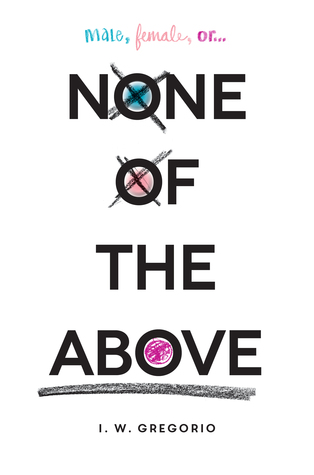
This month we're pleased to highlight debut novelists, I.W. Gregorio and her novel, None of the Above. Kristin is a senior in high school, homecoming Queen and track star, when she learns something about herself that makes her rethink everything about her she’s ever known. She’s intersex.
On
Friday, May 1, 2015, Marcy and I shared our Five
Favorite Things from I.W. Gregorio's
debut novelNone of the Above.
Now you get to hear the author’s favorites!
1) What is your favorite line or paragraph from the novel
as it relates to the main character's development and/or growth?
My main character is a runner and a
hurdler, so perhaps my favorite line to show her growth (spoiler alert!) is in
the penultimate chapter:
"I’d been running for so long, trying to escape from who I was.
Here in the steady circle of Darren’s arms, I was finally ready to stand
still."
2) What is your favorite chapter ending or cliffhanger?
Probably the end of Chapter 42 when
Kristin downed the bully who was trying to beat her up:
"It turned out that David Letterman's gender verification test had
something to it, after all."
3) Who is your favorite secondary character and why?
Definitely Darren. He is the
prototypical under the radar guy that doesn't date much during high school but
who is GREAT husband material!
Little known fact: None of the Above was originally written
in dual narrative, with Darren as the second POV!
4) What is your favorite line or paragraph of
description?
"One day I would find my own place. I
couldn’t run there, though, because it didn’t exist yet; I had to build it
myself, out of forgiveness, truth, and terrifying gestures of friendship."
5) What is your favorite line of
dialogue?
“Wait, you called the urologist asking for
surgery?” she asked. “And she let you go through with it without making you see
a psychiatrist first?”
“I wanted it.”
“But you were still wigging out over your
diagnosis. That is sonotthe
best time to go ahead with something like that.”
“I know, that’s what she said too, but I
needed them out.” I stopped for a second. “Wait a second. Does that mean you
still have them?”
“Have what?” Gretchen asked, smirking.
I blushed, and gestured toward my groin. “You
know.”
“Oh,” she said loudly. “You mean mytesticles?”
I couldn’t help myself. I looked around to
see if anyone had noticed, but the nearest dog-walker was several hundred feet
away.
“Yes,” Gretchen said firmly. “I still have my
testicles.”
“How can you stand it?”
“What is there to stand? Whatever higher being you believe in made me
what I am. I heart my gonads.”
We’d like to congratulate Ilene on the success of the
novel and can’t wait to read her next novel.
I. W. Gregorio is a practicing surgeon by day, masked avenging YA writer by night. After getting her MD, she did her residency at Stanford, where she met the intersex patient who inspired her debut novel, None of the Above (Balzer + Bray / HarperCollins). She is a founding member of We Need Diverse Books™ and serves as its VP of Development. Her writing has appeared in The Washington Post, San Francisco Chronicle, San Jose Mercury News and Journal of General Internal Medicine. A recovering ice hockey player, she lives in Pennsylvania with her husband and two children.
To read more about I.W. Gregorio’s None of the Above debut novel please go to: