The weather today is
hot and sunny. A surprisingly warm and muggy day considering summer is
still a few days off. Maybe it's the heat but somehow I've gotten into
my head to work on an easy reader. Here's what I've found; these books
are not easy to write (or get published!) Below are a few tips if you do attempt to write one.
-Easy Readers are generally 32 to 64 pages long and range from 200 to 1,500 words.
-The story is told mainly through action and dialogue in gramatically simple sentences, typically one idea per sentence.
-The
books average two to five sentences per page in lower levels, going up
to a paragraph or two per page or two per page for older readers.
Leveled Readers:
Level
1- Emergent Reader: 24-32 pages, 20-100 words, controlled vocabulary,
repeated words, picture clues, predictable patterns.
Level
2-Progressing Reader: 32 pages, 100-300 words, longer sentences, simple
dialogue, more in depth plat, non-fiction and fiction.
Level
3- Transitional Reader: 32-48 pages, 300-500 words, controlled
vocabulary, multi-sylabble and compound words, more dialogue, different
POVs, more chapters, more complex story lines, great range of genres
Level
4-Fluent Reader-48 pages, 500-900 words, controlled vocabulary, more
advanced vocabulary, detailed and descriptive text, complex story
structure, in-depth plot and character development, full range of
genres, table of content.
Beginning Readers come after Level 4 and Early Chapter Books come before Chapter Books.
note: Controlled vocabulary usually refers to words on the Dolch Sight Word List (www.kidzone.ws/dolch/index.htm)

Tuesday, June 17, 2014

Thursday, June 12, 2014
Amy Tipton - Signature Literary Agency - Interview
 |
| photo by Ed Glazar |
by
Dave Amaditz
In a previous post http://rt19writers.blogspot.com/2014/01/announcement-of-representation-amy.html I gave a shout-out to everyone that I had
signed with the awesome, Amy Tipton, Signature Literary Agency http://signaturelit.com/. To say that time
passes quickly is an understatement, as it’s already been six months. Much has
happened since then. Amy has been busy behind the scenes doing what agents do…
Sorry, you’ll have to wait a little while longer to hear what keeps her busy.
As for me…, after doing two or three rounds of
editing with Amy to make sure my novel was ready for submission, I’ve been able
to concentrate on my writing (another young adult novel with the first draft
now nearly three quarters complete). Having Amy’s expertise behind me has made
writing so much easier. Instead of worrying (or worrying too much :-)) about
submission status, I can now more fully focus on the important things like
character, plot, setting and conflict.
Also, before I forget, I want to say that I’ve
gotten a quick taste these last six months of the massive amount work required on Amy’s
part to maintain success as an agent and I know she’s awfully busy… So… Amy… Thank You For Your Time and for Agreeing to the Interview. It means so much
to me that you’re willing and excited to do the interview. It Reminds Me How Lucky I Am
to Have Signed with You.
Now, to the questions……
Dave:
For those who don’t know you, could you give a little history of how you came
to choose a career as an agent… And a bit about Signature Literary Agency.
Dave:
Impressive experience, to say the least. So who better to talk about the fact
that we’re in a changing market, a constantly evolving market. Could you
address a few major concerns your current and future clients should know, or
should be made aware that will affect the likelihood of publication? (The battle
with the self-published market. The book market being oversaturated with
inexpensive or free material as well as poor quality material. Lack of
marketing dollars. Less people reading. Etc. etc.)
Amy:
I think you just addressed a few major concerns yourself: the self-published
market. The book market being oversaturated with inexpensive or free material
as well as poor quality material. Lack of marketing dollars. Less people
reading. Etc. etc. …
Publishing is in transition and it is hard to know
where it will end up but it’s not going away—listen, Chicken Little, the sky
isn’t falling. I think Malcolm Gladwell said in 2013, “No industry sells something people want and need more than the book
industry. If they were selling Styrofoam, I'd be worried, but books have
tremendous impact on people's lives." I agree.
Dave:
Excellent advice. Now that we know that the sky isn’t falling on the publishing
business, it’s obvious writers should continue to write and submit their work.
Which one do you check out first when scanning your submissions? Query letters?
Sample chapters? Or both? Can a terribly written query be overlooked if the
writing sample shows promise? Would you give someone who sent in a writing
sample that wasn’t completely polished a chance to redo it because the concept
addressed in the query was so awesome? How about letting us know your fastest
time to hit the delete button and what it was that could’ve prompted such a
drastic response?
Amy:
Query letters and the actual writing in a book are so different—they’re
completely different animals. I don’t really read sample chapters—though my
colleagues at Signature do (which is why we request the first five pages)—I
mean, if the query is good, I’ll just request and if it’s awful awful, I just reject
(if there are misspellings everywhere, words missing, commas lacking, etc). I
look at the sample if I’m on the fence—so it does pay to send. And a terrible
query *can* be overlooked by me. If I am excited by the idea in the query, if I
see potential, I’ll request. If I read and the concept was awesome but the book
just wasn’t there, I will reconsider/reread later (I have read the same book
4-5 times now by an author in different incarnations because the idea is cool.)
Dave:
You hear that everyone? Sounds to me as if the submission door is open. We’ll
talk later about what exactly she’s looking for, but first, another question
for Amy.
What’s your take on submitting to you what might be
trending in the marketplace? Or don’t you bother with trends?
Amy:
I don’t tend to bother with trends because publishers are so fickle—like, they
*say* they want A but they don’t want A, they want B. (Plus, things that are
trending, I don’t rep nor do they get me excited …).
Dave:
I mentioned earlier that I’ve been able to write, and write a lot, since
signing with you. Could you give us a brief rundown of what it is that occupies
your day as an agent. The exciting, and what we might consider the
not-so-exciting. Could you let us know what is your favorite part of being an
agent, and if like me and most writers, you’re often checking the email inbox
for messages of good news?
Amy:
Of course, I’m checking my email for good news! Always! That is my favorite
part—passing on the good news! (Hopefully, I’ve sold someone’s book and get to
tell them! Or I’ve offered rep to someone and they’ve accepted!)
I am super busy but it’s mostly boring stuff (like
contracts or royalty statements or following up with editors that have various
subs) and sometimes it’s fun (like cover consultations) … I get tons of queries
to read and I am either rejecting or requesting, plus reading (and
editing—which takes time) my already-signed clients; I also work with a foreign
rights agent so I’m talking foreign with them and I am working with a film/TV
agent and I keep in contact with them too … I also do awesome interviews (which
also takes time)!
And I do try to do it all in a timely fashion and
that’s hard …
Especially (and I never talk about my personal
life—why would you care?—but this info pertains to occupying time) now, I am
relearning to walk—I had a stroke a few years back—and physical therapy is
intense and I do it about once a week but anything/everything I do (even this
interview) is therapy and hard for me.
Dave:
And you still didn’t hesitate, didn’t blink an eye to agree to do this. Which
makes what you’ve done here so much more impressive. So readers, listen up!!
You’ll definitely want to hear the answer to the next question.
Amy, what, if any, is the one story you’re dying to
hear a pitch for? Why that story?
Amy:
I am DYING for some sort of YA about homegrown terrorism/anarchy/Black Bloc
group—kinda like the movie “The East.” Or some secret society. I could get into
an idea about a bitchy/dark sorority … Hazing gone wrong, maybe?—not some
“Afterschool Special” about the dangers of drinking too much either, please! I
actually read a ms. (I requested) that addressed this YA terrorism idea, which
I (reluctantly, even stupidly) passed on. Then I rewatched that documentary
about the Weathermen and it rekindled the idea.
I also rewatched that movie “Heavenly Creatures” and
am searching for a story that explores a close/weirdly close
friendship/relationship between 2 kids …
Also, I am super into the shows “Orange Is The New
Black” (which, yes, was a book) and “Breaking Bad”—if there is anyone out there
with an idea like these shows, I’m listening …
Dave:
Wow! I know that I’d love to read something on those topics, too. But just in
case somebody’s written something else that doesn’t exactly fall into those
categories, perhaps you can give the readers an idea of your taste in
literature. What are some of your favorite all-time reads? Can you perhaps pick
two or three classics and two or three more recently written?
Amy:
Favorite all-time read is either “The Abortion: An Historical Romance 1966” by
Richard Brautigan or “To Kill A Mockingbird” by Harper Lee. Adult reads I love
include “The Great Gatsby” and “She’s Come Undone” and even “Fear of Flying”
and I love author Michelle Tea. Kid books include “The Outsiders” and any
Ramona Quimby book or any Judy Blume (but especially “Are You There God? It’s
Me, Margaret”) and, I know it’s not great literature or anything, any Sweet Valley
High book. Books I love as of late are “Butter” by Erin Jade Lange and “Charm
& Strange” by Stephanie Kuehn and, of course, “Wonder” by RJ Palacio. (It’s
not recent recent but also shout out to “Living Dead Girl” by Elizabeth Scott.)
I also love “Night Film” by Marisha Pessl and, of course, “Gone Girl” by
Gillian Flynn. (And not recent recent is “Snakes and Earrings” by Hitomi
Kanehara—OMG, love! And “Chump Change” by Dan Fante. And “Homeboy” by Seth
Morgan.) How about those books in my TBR (to be read) pile? Now, I don’t know
if they’re any good—I can’t vouch for them—but the idea of them is making me salivate: “Bird Box” by Josh Malerman,
“The Fever” by Megan Abbott, and “Room” by Emma Donoghue. There are so many great books—I am not even
able to list them all … I didn’t even touch nonfiction …
Dave:
What an awesome list - many I’ve not read but are now on my to-read list. So,
say someone has written about a topic that you love, that you’re DYING to hear.
What is it that sells you on a story? Voice? Characterization? Both?
Amy:
Both. Definitely. You should have 1 or the other, at least.
Dave:
Would you choose to not represent an author or a story because you have a sense
it’s not marketable enough? Or do you go after it finger on trigger simply
because you’ve fallen in love with the story?
Amy:
It depends. I used to go full-force simply because not only did I love the
story but I loved the idea behind the
story. But it’s a lot of work to take on a project like that so now I weigh my
options—consider the pros and cons. But I’m still more likely to take on
something because I love it—market be damned! (You know that song by Tom Petty,
I Won’t Back Down? Marry that with Joan Jett’s Bad Reputation. That is me.)
Dave:
I Won’t Back Down. Isn’t that the attitude any writer should want from their agent?
I mentioned above that I’ve done a few edits for you
to make my novel submission ready. Can you briefly describe for the reader your
editing process, how hands-on are you, what you expect from an author once
they’ve signed etc. etc.? And just as importantly: is editing necessary before
submission?
Amy:
I’ve also mentioned projects taking work so that should clue you in that I am
hands-on. Extremely hands-on (but have no fear—I will not suggest that your cat
turn into a ninja!—I try to stay with you/your vision). Editing is necessary in
most cases (and you should always, always edit before subbing agents!)—even
just a word misspelled or a comma needed is something I will revise before
submitting (see?--hands-on).
The only thing I require/expect from an author once
they’ve signed is patience! It is a S-L-O-W process. I can’t stress that
enough. Add even more time to the already slow process because I rarely follow
what’s “hot”—the trends—so it’s a fight with publishers to publish what I like,
what I do. (And trust me—I want to get you/your book published, I want to get
paid too—so, believe me, I’m working my a** off for you! OMG, relax will ya!
Re-lax! You’ve found an agent—let them work for you, it’s their job so let them
do their job!)
Dave:
Yes. We talked about that right away, and you answered a whole list of
questions for me before I signed. Fees. Royalties. Expectations etc. etc. What
are some questions a prospective client should ask of you, or any agent for
that matter, before signing?
Amy:
I don’t know! Ask anything! Ask everything!
Dave:
Could you give a brief rundown before we close of what it is you are looking to
see come your way? And, what it is you have absolutely no desire to read and
therefore, should not ever be sent?
Amy:
Do. Not. Send. Sci Fi. Please! That means no paranormal or magical or supernatural
or fantastical or even alt worlds; I don’t rep books with made-up languages or
faeries or wizards or vampires or ghosts or aliens, etc. No magic potions (or elixirs) here. There are many other
agents, good agents, who do rep those things. I like reality-based YA and MG.
Dave:
What should an author include in their submission package when sending to you?
Is there a best time to send? And finally, where and how can you be reached?
Amy:
I am always working (even on vacation) so send your query any time (I am up
late and rise early) or day. Send by email: amy@signaturelit.com.
Thanks
again, Amy, for taking the time to answer this long list of questions.
I know it was extremely detailed, but by doing this I was hoping to let
everyone know everything about your awesomeness,
and just as importantly to allow them to do a one-stop-shop where they could
find out everything they ever wanted and needed to know before sending you a
query.
Monday, June 9, 2014
First Friday-Five Favorite Things, Side Effects May Vary, Julie Murphy
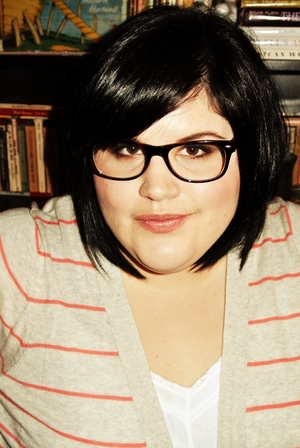
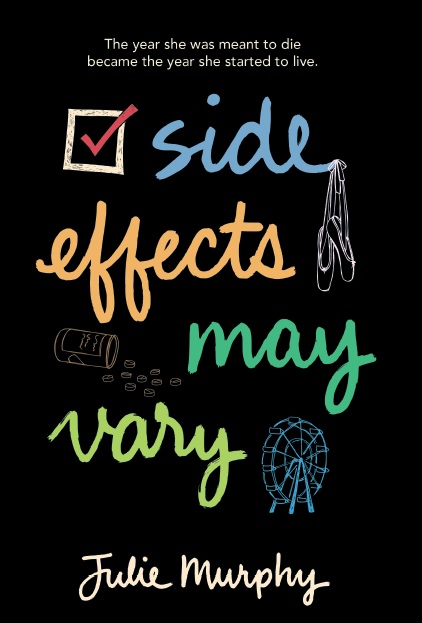
by Julie Murphy
This past Friday, June
6, 2014, Marcy and I posted our answers to Julie’s debut novel, Side Effects May Vary. We would like to
congratulate Julie on her debut novel and for providing us with her answers which
will give you even more insight into the heads of her well-developed
characters.
Thank you so much for having me! This was such a
fun feature to do. Below are my answers!
1) What is your favorite line or paragraph from the novel as
it relates to the main character's development and/or growth?
Ya know, I'm going to be really obvious here and
say the first line of the book. I'm really into first and last lines and how
they relate to one another. Here's Alice's first line:
"If ever my parents gave me a religion, it
was the gospel of honesty."
Alice really prides herself on her ability to be
brutally truthful, but she spends so much of the novel lying to herself. That
being said, I really love the juxtaposition of this first line. Hopefully if
you read to the end, you'll see whether or not Alice is finally able to be
honest with herself.
2) What is your favorite chapter ending or
cliffhanger?
A lot of the chapters end on sort of a grim
note, so I chose a lighter one that's always been one of my favorites. Come to
think of it, it's actually stayed intact since the very first draft.
"I laid my head against him and he wound
his arm around my shoulder. 'What's going to happen to us, Harvey?'
He pressed his lips to my head and said, 'It's a
surprise, I think.'"
3) Who is your favorite secondary character and
why?
Natalie, Harvey's mom, is without a doubt my
favorite. She's this total constant and has such a clear understanding of
Alice. And Harvey, too. She sees both of them for the people who they might
some day become. She's also very calculated with her words, which is something
I always gravitate to.
4) What is your favorite line or paragraph of
description?
I would have to say this one Alice line from
when Alice and Harvey go watch the prom from the golf course outside of the
country club where it's being held. I really love this particular section
because Alice is seeing her peers say goodbye to the lives they know in a
completely different way from the way she currently is, but there's still
something there that she can relate to. (Even if graduating and dying
are totally not the same thing!)
"We sat there and watched the juniors and
seniors of Hughley High fall in and out of love, say no and say yes, let go and
hang on. A few couples tripped off into the darkness together while others
stood on the terrace, yelling back and forth as the tension brought on by prom
and graduation slipped between the crevices of their cracking
relationships."
5) What is your favorite line of dialogue?
Well, I can't say my absolute favorite because I
fear it might give too much away, but this one from Harvey when he's especially
frustrated with her.
"You never surprise me, Alice, which is
such a disappointment."
Website: http://juliemurphywrites.com/books/
Twitter: https://twitter.com/andimJULIE
Friday, June 6, 2014
First Friday - Five Favorite Things - Debut Novel Day
by
Dave Amaditz and
Marcy
Collier
Welcome to June’s version of - First Friday - Five
Favorite Things - Debut Novel Day. In this monthly series, we ask five simple
questions about a debut novel that will hopefully entice anyone reading this
post to pick up the novel and read it themselves, and/or give them at a glance
some insight into the author's writing style and voice as well as how some of
the characters might think or act. We do this by presenting, first, answers to
our Five Favorite Things, followed by the author's answers in a follow-up post.
This month we're pleased to highlight debut YA
novelist, Julie Murphy and her novel, Side Effects May Vary, a wonderful story
about a young girl’s struggle to gain control over herself. We get to watch
Alice’s journey unfold as she comes to terms with her identity in her fight to
overcome being diagnosed with leukemia.
Everywhere you look you see that spring is now fully
entrenched around us. Stay tuned in future months to read about some more great debut novels
that you can take with you and enjoy while you’re traveling, sitting by the
pool at your favorite vacation destination, or even at night while you’re
chilling out on your front porch or in the backyard after a long, hot day at work.
Marcy and I are super excited to share our picks with you! Thank you to all of
the fabulous debut authors who have agreed to participate. Marcy and I are
looking for many more reviews to follow.
1) What is your favorite line or paragraph from the novel as it relates to
the main character's development and/or growth?
Dave – I don’t think I’m
giving away anything from the book here because the revelation that her cancer
is in remission comes early in the book, so to preface this short section I’ll
simply say that it comes soon after Alice, the main character, has been told by
her doctor that she is now in remission. She’s talking about her on-again
off-again relationship with Harvey, her life-long “friend” and neighbor.
Every day I seemed to pull further away from Harvey. I’d never
had a problem with confrontation before, but I didn’t know how to tell Harvey
that the idea of “us” terrified me. I couldn’t promise him the things he wanted
because Harvey wanted forever. And that had been so much easier to give him
when forever had no expiration date.
Marcy – Dave and I had similar
views on Alice’s character growth. As Dave said above, everything changes once
Alice receives the news that her cancer is in remission.
I wanted to be that person for all of them – the person they’d
painted into their memory, the memorialized version of Alice – but that girl
wasn’t me. And that scared me. As it turned out, my greatest fear in life had
become expectations.
2) What is your favorite chapter ending or cliffhanger?
Dave - I chose this particular
ending because in so few words it was able to sum up so much about Alice. She’s
talking here with a boy that she met in school, a boy new to the town and
one whom she recently found out was more than likely going to be moving again -
depending on Alice’s response.
His shoulders fell. “Well, I guess you’ll find out what I decide next
week,” he said.
I was sad for Eric because he’d never known a home, not like I
had. But I wasn’t sad enough to give him one.
Marcy – This chapter ending is
extremely powerful and shows us Harvey’s raw emotions from an early age.
On that cold night in January it all slipped into place for me and
she became my everything and my everyone. My music, my sun, my words, my hope,
my logic, my confusion, my flaw.
I was thirteen years old, and she was all these things to me.
And I was her friend.
3) Who is your favorite secondary character and why?
Dave – If Harvey is to be
considered a secondary character, then I choose Harvey, because he plays such
an integral part of the story. He is the ying to Alice’s yang and everything in between.
Consider this thought from him.
When you’d loved the same girl for your entire life, it was hard
to believe that there might be anything after that. When you loved one person
so wholly, do they take that love with them? Was that how it worked? If so, I
was okay with that. I loved every bit of Alice, even the horrible, ugly parts that
made other people cringe. If this was all the love I could ever give, then my
love had been well spent. When Alice was gone, she would take all my love with
her. Whether she was floating through some heaven or decomposing six feet
under, that part of me would always go with Alice.
Marcy – Debora likes Harvey but
he can’t get over Alice to have a real relationship with anyone else. Debora has a
heartfelt conversation with Alice, even though she’s been hurt. I chose Debora as my favorite secondary character because she's smart, caring and clearly wants what's best for Harvey. She puts his needs before her own.
“Listen,” she said, “I can’t tell you what to do. I mean, you of
all people, obviously. You don’t listen to anyone. But don’t destroy Harvey. Because
you can. You have that power. Love’s different for him. For Harvey-”
4) What is your favorite line or paragraph of description?
Dave – When I read this I knew
immediately it was the line I wanted to use, and even though I highlighted a
few others within the book, this stood out to me more than any of the others
every time I read it.
Our lips touched. It wasn’t our first kiss, but in that moment,
I knew the meaning of it all. I knew every word in the dictionary, every color
in the rainbow.
Marcy – This comment was spot on from Alice. It’s how anyone in love
would feel if they lost their true love.
I’d always heard that when you truly love someone, you’re happy
for them as long as they’re happy. But that’s a lie. That’s higher-road
bullshit. If you love someone so much, why the hell would you be happy to see
them with anyone else? I didn’t want the easy kind of love. I wanted the crazy
love, the kind of love that created and destroyed all at the same time.
5) What is your favorite line of dialogue?
Dave – This is from Alice, being blunt as usual.
“We all die. We are dying. I’m just in the fast lane, I guess,
dying faster than the rest of you slugs.”
Marcy
– This line is from Alice talking to
Harvey.
“I’ll
miss you most, Harvey.” She sat up on her elbows. “I don’t know what it will
feel like after, but I know I’ll miss you most.”
Website: http://juliemurphywrites.com/books/
Twitter: https://twitter.com/andimJULIE
Monday, June 2, 2014
Obscurity, Thy Name is Author
Obscurity, Thy Name is Author
by Andrea Perry, but really Roger Rosenblatt for the NYTimes Book Review

Not being J.K. Rowling, or a Kardashian, I don't expect to be recognized in a bookstore. On several occasions I have been seated at lonely author's table and answered questions, but not about my book. I have been asked where I bought my shoes, did I know I looked like a character from a soap opera, and did I know where the restrooms were. But as Roger Rosenblatt recently wrote, you would hope once recognized as an author, the bookstore employees, or even the bookstore customers might be even a little bit impressed. Not so much. Without further ado, I will link you with Roger's take on humiliation at pretty much any bookstore reading and autograph session. And everywhere else as well...
Please Turn to the Chapter on Obscurity...
Author's Note / Roger Rosenblatt
The New York Times Book Review
Sunday, May 25, 2014
by Andrea Perry, but really Roger Rosenblatt for the NYTimes Book Review
Not being J.K. Rowling, or a Kardashian, I don't expect to be recognized in a bookstore. On several occasions I have been seated at lonely author's table and answered questions, but not about my book. I have been asked where I bought my shoes, did I know I looked like a character from a soap opera, and did I know where the restrooms were. But as Roger Rosenblatt recently wrote, you would hope once recognized as an author, the bookstore employees, or even the bookstore customers might be even a little bit impressed. Not so much. Without further ado, I will link you with Roger's take on humiliation at pretty much any bookstore reading and autograph session. And everywhere else as well...
Please Turn to the Chapter on Obscurity...
Author's Note / Roger Rosenblatt
The New York Times Book Review
Sunday, May 25, 2014
Saturday, May 31, 2014
Coloring Outside the Lines by Judy Press
When
I was a kid I loved to color in coloring books, especially if I had a
new box of crayons to work with. There was something about the smell of
new crayons, with names like, "Granny Smith Apple Green" and "Wild
Strawberry Red" that promised hours of creative fun. I also liked the
challenge of staying in the lines, although I
never thought about what would happen if I disobeyed this unspoken
command. It wasn't until around age seven that I gained enough
confidence in my drawing skills to put away the coloring books and draw
freehand.
As an art educator, I'm often asked my thoughts about kids using coloring books versus drawing from their imagination. My reply is that I whole-heartedly endorse coloring books, as long as a blank piece of paper and crayons is also available. In the seventies an anti-coloring book was released. It was a fun new take on the traditional coloring books. It has remained popular and was recently re-issued.
So what do coloring books have to do with writing for children? Sometimes it takes "coloring" outside the lines to come up with a good story. Below I've quoted from an article in the June issue of "Children's Writer" about some new books that test the limits and rules of writing picture books.

"Writer and illustrator Jon Klassen has created handfuls of noteworthy children’s books, and in the process has managed to cut through convention to break new ground. From his much ballyhooed I Want My Hat Back (Candlewick) to the Caldecott Medal winner, This Is Not My Hat (Candlewick) to The Dark (Little, Brown), written by Lemony Snicket, Klassen’s books bust boundaries. Writer’s House Agent Steven Malk represents Klassen, and explains, “I’m often drawn to picture books that many people might describe as quirky or different. For that reason, I think I represent a lot of books that break barriers, but if I had to point to one, I’d have to go with I Want My Hat Back. It’s a great example of a book that contains certain ingredients—in this case, namely the ending—that many people might think would be challenging in the current picture book market, yet it’s become a hugely successful bestseller.”
As an art educator, I'm often asked my thoughts about kids using coloring books versus drawing from their imagination. My reply is that I whole-heartedly endorse coloring books, as long as a blank piece of paper and crayons is also available. In the seventies an anti-coloring book was released. It was a fun new take on the traditional coloring books. It has remained popular and was recently re-issued.
So what do coloring books have to do with writing for children? Sometimes it takes "coloring" outside the lines to come up with a good story. Below I've quoted from an article in the June issue of "Children's Writer" about some new books that test the limits and rules of writing picture books.
"Writer and illustrator Jon Klassen has created handfuls of noteworthy children’s books, and in the process has managed to cut through convention to break new ground. From his much ballyhooed I Want My Hat Back (Candlewick) to the Caldecott Medal winner, This Is Not My Hat (Candlewick) to The Dark (Little, Brown), written by Lemony Snicket, Klassen’s books bust boundaries. Writer’s House Agent Steven Malk represents Klassen, and explains, “I’m often drawn to picture books that many people might describe as quirky or different. For that reason, I think I represent a lot of books that break barriers, but if I had to point to one, I’d have to go with I Want My Hat Back. It’s a great example of a book that contains certain ingredients—in this case, namely the ending—that many people might think would be challenging in the current picture book market, yet it’s become a hugely successful bestseller.”
Thursday, May 29, 2014
 |
Oh, what do you see in the sea my friend?Still Fishing for an Agent?Kitty Griffin & Natalie Lakosil
When I write to her I call her, Dear Agent, and really there is something nice about having someone on your side.
Writing is a solitary, sometimes lonely ab-session (I say ab-session, not obsession because for me, and for many of my writer friends, stories are something that need to be drained out of us. We become infected with characters and their predicaments and what can a writer do but write, or drain out the story?)
I really wasn't looking for an agent when I found Natalie. I'd successfully negotiated a deal for a book and felt fairly comfortable with life.
But a friend and I decided to go to the New Jersey SCBWI HUGE BIG GIANT conference in Princeton and
WOWZERS!!!
What a conference!
Seriously, there were dozens and dozens of agents and editors
and
we were all trapped in a hotel together! They couldn't run from us.
But I'd submitted a story that drained serious blood from me. A project years in the making and I knew (I know) it's dark, it's odd, but I submitted my pages and was paired up with this lovely young woman.
And she really liked my writing.
Click.
She wasn't just patting me on the head and saying, "There, there, crazy writer." No. We talked. We clicked.
I gave her a copy of my latest book. I followed up with a thank you card.
And when she made an offer to represent---
I took it (although, being the very cautious person I've become, I had Attorney Mary Flower look things over. If you ever need someone who knows kids books and contracts, she's very good and she's in NYC)
So we signed. And now that it's summer and Route 19 writers are off and about the world, one to Ireland, one to Italy...Natalie agreed to do a post about getting an agent.

(See, isn't she lovely?)
ON FINDING AN AGENT
|
Subscribe to:
Posts (Atom)