By Carol Baicker-McKee
I added some links at the bottom on 1-27-2012 - also some captions.
See also two related posts:
Caldecott, CEOs and Confidence by Cynthia Light Brown
Women and the Caldecott, Part II: More Musings on the Gender Gap by Carol Baicker-McKee
 |
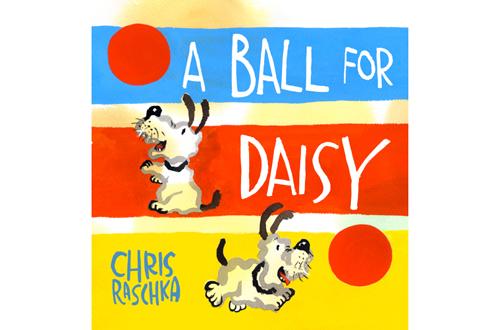
| The 2012 Caldecott Medal Winner. Published by Schwartz & Wade, 2011 |
I didn't set out to write
this post. My plan was to do one of my paired picture book reviews featuring this year's winner of the Caldecott Medal for the best illustrated book with a past winner that complemented it. I thought I'd also write a few sentences about each of the Honor winners and suggest similar golden-oldies for them too. And I probably will still do that - they're all lovely books, as you can see throughout this post - but I'll do so at a later date. Because something struck me this year about the winning illustrators.
 |
| 2012 Caldecott Honor. Published by Little Brown |
All four were men. Not a female in the bunch.
And that got me curious about whether there was a pattern.
There is.
 |
| 2012 Caldecott Honor. Published by Roaring Brook Press, 2011 |
Call It the Glass Slipper Ceiling
What's undeniable is that women are much less likely to win this important award. I haven't done any sort of a formal statistical analysis, but a quick hunt through the data shows a large gender difference in every decade since the award was initiated in 1938. Women have won
less than a third of the Gold Medals (32.5%) and slightly over a third of the Honor awards (36.7%) given out over the award's 75 years. In no decade have women come close to winning as many awards as men. Beginning in 1958, men have swept the awards fourteen times; women have swept a year only once - way back in 1945.
 |
| 2012 Caldecott Honor. Published by Hyperion |
What's especially odd (at least to me) is that things seem to have actually gotten
worse for women over time: during the last 20 years, women have won the top prize only 25% of the time (5 of 20) and a similar rate of honors (27.3% - 17 outright plus one more as part of a husband-wife team out of 65 honor awards); in contrast, during the first 20 years of the award (1938-1957), women won the Medal outright 5 times plus 3 times as part of a husband-wife pair for 35% of the awards - and they won 50% of the Honors during that time!
What the heck?
A Little Background: The Caldecott and Why It Matters
To understand why anyone would care about this gender discrepancy, you need to know the importance of the award. The Caldecott is arguably the most coveted award in the U.S. for illustrators. Each January, the American Library Association awards the medal to honor "the artist of the most distinguished American picture book for children" published during the previous year. In addition to the gold medal winner, the ALA also recognizes one to five Honor books, a total of 233 to date. If you want to learn more about the award and past winners you can check out these resources:
- Info about the award on the ALA site here
- List of all the past Medalists and Honor winners here
- The Wikipedia summary of the award
- Images of most of the covers of past winners on the Small Fry Books website here.
Winning the Caldecott or even garnering an Honor benefits an illustrator's career in multiple and lasting ways. Not only do these awards immediately and tremendously boost trade sales of the winning title, they virtually guarantee that every school and public library will acquire a copy - often multiple ones - and they also raise the profile of an illustrator's earlier and subsequent work. In addition, Caldecott titles tend to remain in print almost indefinitely - particularly meaningful in an age when most children's books go out of print in a year or two. Winning illustrators can also expect to receive dozens or even hundreds of speaking invitations - and substantial speaking fees. Perhaps most importantly to many illustrators, though, the award often raises their stature in ways that confer both more opportunities for future work and greater freedom to create what they want.
Why Don't Women Illustrators Win their Share of this Award?
I don't know! So what follows are some hypotheses, some mine, some I've come across in google land. Please feel free to chime in if you have ideas (or better yet, facts).
Hypothesis One: The percentage of female winners could just reflect their distribution in the pool of children's book illustrators.
Analysis: This seems unlikely to me - but I can't disprove it because I can't find any reliable statistics on the gender breakdown of illustrators. I've tried hard to find some kind of data on the SCBWI site and other lists of illustrators, but without luck. If anyone out there has any stats or a good idea about how to track them down, let me know.
In my google searches, I did come across
this interesting blog post from last spring by the poet and artist Nikki Grimes, in which she mentions a prominent illustrator who alleges that women only get 20 percent of illustration assignments.
Certainly the Caldecott is hardly alone in finding eminence more often in the work of male illustrators. For example,
this year's list by the
New York Times of the Top Ten Illustrated Books includes just
two books by women. The gorgeous compilation
Artist to Artist: 23 Major Illustrators Talk to Children About Their Art that showcases illustrators invited to exhibit at the Eric Carle Museum of Picture Book Art in Massachusetts features a paltry
five female illustrators.

BUT, if you've hung around the children's publishing world at all, you'll probably have noticed it's, well, estrogen-dominated. Attend any children's lit-related event and you'll quickly realize that authors, editors, art directors, children's librarians, and even the random book fan are mostly female. (Restroom lines are a particularly easy way to capture this at a glance. At the first mid-Winter SCBWI conference I attended, women doing the pee dance in an interminable line went rogue and stormed and occupied the nearly empty men's room during the lunch break - because otherwise a good many of us would have either missed the afternoon sessions or peed our pants.) Although it's true that the illustrators' events I've attended have usually had a bigger proportion of guys than the children's writers' events I've been to, women have still greatly outnumbered men - so if more guys are pursuing children's illustration, they're skipping conferences and other author/illustrator events.
At any rate, if I'm right that female illustrators (or at least wannabes) actually outnumber males, then the discrepancy is even more discouraging.
Hypothesis Two: Men are better illustrators.
Analysis: Geez, I hope this isn't true. Plus I really just doubt it. Aside from the fact that I can spout the names of dozens of fantastic women illustrators off the top of my head, including plenty whose works are enduring favorites, I've really never read or heard anything about a significant gender difference in artistic ability. (Though
the Nikki Grimes post had comments from an artist with a hypothesis about the kinds of artistic skills men might excel in.) For another thing, being an outstanding illustrator for kids seems to me to require skills, like understanding child development, that would give an edge to women, since they are still socialized to be more in tune with young children than men are.
What's more, there
are some illustrator awards with a more equitable gender split. For example, the Greenaway Medal that's the UK equivalent of the Caldecott has gone roughly equally to men and women (though women have a slight edge, especially in recent years). See the list
here.
Hypothesis Three: Publishing Is Biased in Favor of Male Illustrators
Analysis: The idea is that for various reasons publishers either save plum assignments for men or devote more resources (like publicity budgets) to them and these acts position men to be more likely to win major awards. Again, I find this hard to believe as the primary explanation, though I guess it might come into play sometimes. (
The Nikki Grimes post discusses a possible "sexual heat" theory that's kind of fun to contemplate; makes kids' publishing sound a lot more lascivious and conniving than what I've witnessed!)
Hypothesis Four: Award Committees Are Biased in Favor of Male Illustrators
Analysis: The idea is that committees of course know the gender of the illustrator and either prefer the masculine artistic sensibility in general or just like guys better. I've served several years on a children's book award committee (Best Books for Babies - read about the award
here), and well, I feel skeptical that this could be the main culprit. Our committees have just seem focused on the quality of the art (and text) and its suitability for our intended audience - gender doesn't ever come into the discussion, aside from lamenting how few books for babies depict men in caregiving roles. Moreover, awards committees are constantly changing over, so the bias would have to infect generation after generation of individuals. Certainly not impossible - it wouldn't have to be obvious or even conscious - but to me it doesn't seem likely to be the sole or primary reason.
Hypothesis Five: The Nature of the Illustrating Task Favors Men
Analysis: The idea is that there is something about the task of illustrating a Caldecott winner that makes it more likely to be achieved by men. Having illustrated several books, I can see some ways this might come into play; although this year's winner isn't a good example, Caldecott winners often feature labor-intensive, time-consuming styles of artwork. Typically in picture book publishing, the text comes first and is submitted in more or less finished form (which means the author can take as much time as he or she chooses to get it perfect) - but the illustrator often has to work to a tight deadline. Illustrating a book can thus consume one's life - making it a tough fit for someone with primary family responsibilities. And perhaps female illustrators are more likely to be in that position, thus limiting the kind of work they can produce or abreviating their careers. I don't know; just wondering.
Hypothesis Six/Seven: Some or All of the Above? Something Else?
Actually, given the size and persistence of the discrepancy, it seems likely to me that more than one factor comes into play. I'm confident I haven't covered all possible bases - and I wonder about my own biases in evaluating different possibilities.
So what do you think? And what if anything can/should be done to correct the imbalance?
In Closing: A Few More Interesting Controversies, My Choices for this Year's Caldecott, and Some Great Illustration by Women
- There's lots of concern about racial inequalities - both among illustrators and subject matter.
- Is there a "New York" bias? This year's winners all hail from the NYC area...
- Author-illustrators are FAR more likely to win than illustrators illustrating someone else's text (42 of 75 medal winners - and of the remaining, 7 were illustrated by a family member of the author's, suggesting collaboration of some sort was likely. Interesting given most publishers' preferences for selecting the illustrator and for keeping authors and illustrators completely separate)
- Should popularity with kids (or at least potential wide appeal) be a consideration in choosing winners? (It isn't.)
Here were my top two choices for this year's Caldecott, neither of which won anything. One by a man, one by a woman:
This one did win a Theodore Seuss Geisel Honor.
 |
| Candlewick Press, 2011 |
 |
| Illustrated by Marla Frazee; written by Mary Lyn Ray. Beach Ray books, 2011 |
And here are some more beautifully illustrated books by American women; two books that won the Caldecott, two that did not but to my mind could have.
 |
| Illustrated by Mary Azarian; won the Caldecott in 1999 |
Love, love, love all of Virginia Lee Burton's books
 |
| Written and Illustrated by Virginia Lee Burton, won the Caldecott in 1943 |
Molly Bang is versatile and gifted in so many styles.
 |
| Written and illustrated by Molly Bang who has won Caldecott Honors three times - but not for this book, which I love |
Hard to believe that Rosemary Wells hasn't won a Caldecott.
 |
| Written and Illustrated by Rosemary Wells, a prolific, gifted, beloved author-illustrator who has received many awards and honors, but oddly, never the Caldecott |
ADDED 1-27-2012: Links to check out on this subject:
What a surprise! Turns out my observation was neither unique nor new. Here are a few other sources to check for further thought:
A couple of posts on
Elizabeth Bluemle's excellent
ShelfTalker blog (for Publisher's Weekly)
"Newbery, Caldecott, and Printz by Gender" (from 2011)
"The Awards by Publisher" (from 2012)
Threads on two discussion boards (must be a member):
Verla Kay's Blue Boards Check for threads on the Illustrators boards
Child_Lit The thread is "Awards and Gender"
Two subsequent posts on our blog:
Caldecott, CEOs and Confidence by Cynthia Light Brown
Women and the Caldecott, Part II: More Musings on the Gender Gap by Carol Baicker-McKee

 by Cynthia Light Brown